Day 166 – March 15th – Tongue

I haven’t been feeling the best today, and wonder whether it might be my turn to come down with a cold. Hopefully not, and an early night tonight will certainly help.

I did get a few hours of practice in earlier in the day, and had something of an ah-ha moment with tonguing. I’ve been working quite a bit on articulation of late, and am still finding some things (maintaining a really clear, quick staccato; clear double tonguing) tricky. Often, it’s better when I don’t think about it, and I know that standing up in class I tend to tense up a bit.

The ah-ha moment was with double tonguing. I’ve finally worked out how to turn of the slight twitchy movement in my throat that was accompanying my double tonguing and clearly the source of its muddiness. I think it’s a combination of my work on using only the front part of the tongue, and drawing my tongue in a little bit when I double tongue. Still nowhere near perfect, and I can’t maintain in for very long, but it did feel like a substantial step forward after a few weeks of quite frustrating practice.

This evening I’ve been working on my history project, which is almost done. I’ve been working my way through all the different nineteenth and twentieth century flute designs, and have now arrived at the Kingma system – a relatively recent innovation for playing quartertones. All I’ve got left to do is a couple of section that Trevor has dropped in during class conversations; things like flageolets and mechanism options on modern flutes. If anything, I might have to do a bit of cutting down in the end to get it under 35 pages.

Day 165 – March 14th – Trills 

I didn’t have a hugely productive day today – after yesterday’s long day and late night I needed a lazy morning. After a run and lunch, though, I was feeling sufficiently guilty about a lack of practice to start doing battle with my studies. 

Altès no. 25, the penultimate study in the book, has a devilish half-page of quick trill coupled with dotted rhythms. I spent quite a while on this bit, really aiming for clean trills that sound easy and don’t disrupt the rhythm. I’ve often been told off for not linking my final turns with the rest of the trill, so this is a big part of my ‘sounding easy’ criteria. Rather than starting slowly, I first made sure that the rhythms were correct without the trills but at the right speed. Then I played through small sections adding in the trills and making sure that all sound even. I though this was a better solution than starting slowly because the temptation with more time would be to add in more oscillations of the trill. Most of it is now sounding quite good (though I’m prepared for it being a couple of notches worse at the start of practice tomorrow), but I need to remember to relax rather than get tense over the trills! 

At the very start of my practice session, I stuck to my goal of working with drone tones. I decided to play my warm-up tune – Morning has Broken – with the drone because it uses a lot of notes from the major triad and has quite a few leaps as well. Even over the ten-minute time frame I became a little more sensitive to my intonation in relation to the drone, which is good. My 5ths and 8ves were likely to be on the flat side, and then individual keys have special difficulties. Theoretically I know all this, hopefully the drones will help me iron it out in the long run. It’s tiring work though, and I felt my concentration wavering after ten minutes. 

Trevor’s cold continues, and it looks like class is off again on Monday. We’re so near the end of the course now, but the next two and a half weeks still seem like a long time! 

Day 164 – March 13th – Wibb and Whist

It has been another long day with both a final group trip up to London for Wibb’s masterclass and the Hastingleigh whist night. I didn’t come away with any prizes in whist, but had a nice time.

Hopefully I’ll have more time to reflect on the masterclass tomorrow. We heard the entire Bach E minor sonata, and I really feel like I got a lot out of Wibb’s teaching on this piece. I also feel like I was noticing much more of the things that Wibb then commented on in the students’ playing.

Day 163 – March 12th – Lambs!

Spring in the woods

Spring in the woods

An extra day of grace due to cancelled class, I did a bit of relaxing and plenty of practice. In the afternoon I took myself off on a long walk down a path I haven’t explored before. It took me across the fields and through some lovely woodland, eventually joining up with the North Downs Way near Brabourne. Though I didn’t spot any daffodils (I think up on the hills it’s still a bit cold) but in the woods could see that things were starting to become very green.

On the way back I visited some of our farm’s lambs – suddenly there are so many! The oldest ones are already out in the field with their mums, and round in the barn there are pens full of them. With the window open, my practice has been accompanied by the call and answer of bleats for a few days now, but I was amazed to see just how quickly the numbers have multiplied. The lambs were gorgeous, white and fluffy with over-sized ears and feet. Most were full of energy, and already eagerly exploring both their new world and each other. For some of them, though, play was all a bit too much and a nap in the sun was more enticing.
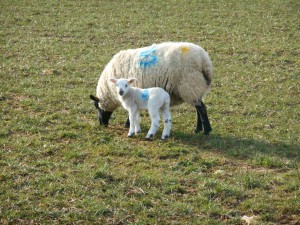
DSCN6250I often find I have a really good practice day when class gets postponed, probably because all of a sudden the pressure is released and I can enjoy things a bit more. This morning, I returned to a technical exercise that has been frustrating me – Taffanel and Gaubert-style scales with mordants on the first and third semiquavers of the descents. I’m not sure whether it was the Altès mordant study I’ve been working on, or my greater relaxation, but the exercise has definitely improved. I’m playing it a lot faster, and most of the mordants are clean and correctly-placed – which just makes the errors more frustrating! If I slip up, I can feel my hands tense up in anticipation of another slip, exactly what I need not to do. Most of the problem areas are up in the third octave, where the trill fingerings aren’t second nature yet.
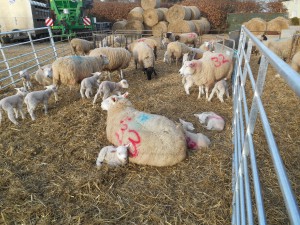
Lots of new families. The numbers are to match the ewes and lambs.

Lots of new families. The numbers are to match the ewes and lambs.

One of my big problems in class of late has been inconsistency of intonation. It’s something I need to fix, but also something that musicians aren’t terribly keen to talk about! Trevor isn’t being very helpful, just telling me to listen more rather than offering any suggestions for practice. While practicing with a tuner and recording myself (I’ve been doing both a couple of times a week) do help, I feel like this area of my playing has got worse since I’ve been here for two reasons. The first is that I’m now using a much bigger dynamic range and being more daring in my playing, rather than playing it safe. The second is that I’m rarely playing with other people, which I was doing a lot of this time last year.

I think one of the things I’m missing is that reference point of others to pitch off, and so have decided to do some practice with drones over the coming week rather than playing with a visual tuner. Rather than beating myself up about it, I need to work on finding a solution even when I’m not regularly playing chamber music.

Tomorrow we’re off up to London for the final Wibb masterclass of our stay, though I’ll try and go to a few more in the coming months if possible. Then it’s back to Hastingleigh for the final whist drive. Time does move on apace!
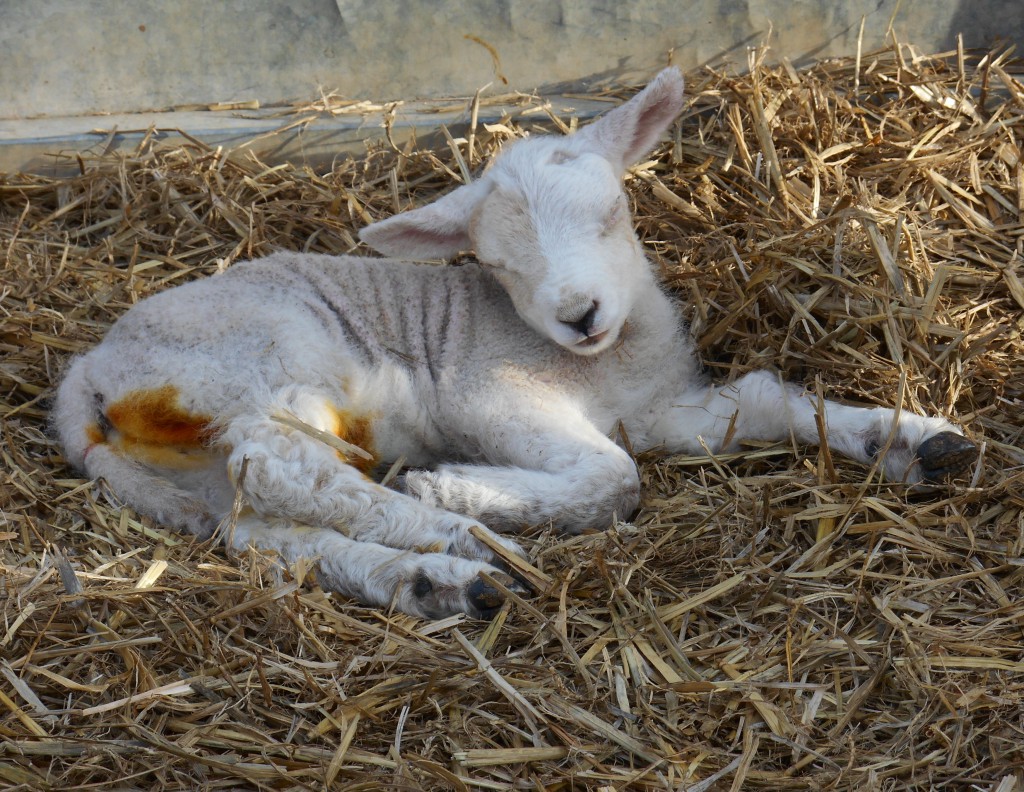
Bed time!

Bed time!

Day 162 – March 11th – Spring Air

A more positive day today, helped along by the fact that it’s almost warm outside! I went running in a T-shirt for the first time since September, and also had my window open all day. I ran past fields of lambs (must take some photos) and daffodils ready to break into flower.

As for practice…I didn’t start out in a terribly good frame of mind this morning, but that improved with the day. I’ve noticed lately that my finger movements are becoming a lot smaller and more precise, both in technical exercises and studies. Trevor’s Practice Book 6 exercises really show up the finger movements that are hard – I’ll be going along at crotchet =126 no problem, and then all of a sudden one set comes up that really throws me off. Today I did E, F, G and H, and there were fewer surprises that I was anticipating, though still more than I want. Anything involving both an F# and a Bb is a disaster!

I spent quite a bit of time working on sight-reading, which is much better these days. I still tend to play unrhythmically when faced with a slow movement with lots of turns and grace notes, as the ornaments throw off my sense of the beat. I think I need not to focus on the little notes so much, but it’s hard when they’re small and I don’t know what they are.

This afternoon, Trevor emailed to say he has a cold and there’s no class tomorrow. I have to confess I did a little happy dance – the thought of playing the Hue Fantasie on one day’s practice was not enticing! Instead, I spent the last hour of my practice working on Andersen and Altès studies. I’m adamant I’ll finish the Altès book next week – while there’s a section of no. 25 that’s tricky with lots of quick trills, no. 26 is easy. Getting through the whole book will be a nice sense of accomplishment.